Chemical industry in India: market overview and growth opportunities
With India's chemical market on track to nearly quadruple by 2040, European manufacturers and investors have a rare window to secure an early position in one of the world's fastest-growing chemical markets.
Schedule a meeting nowIndia is the sixth largest chemical producing country in the world and the third largest producer in Asia. It is also among the top three base chemical producing countries worldwide.
The country’s chemical market is worth about 250 billion dollars and is expected to reach 850 billion to 1 trillion dollars by 2040.
India is making a big push to become more environmentally conscious. Therefore, there are also great opportunities in this sector for foreign companies with sustainable solutions. In this sector, the Indian government allows 100% Foreign Direct Investment (FDI), which makes the sector interesting to invest in.

In addition, the government is investing in research and development of the chemical industry, has reduced import duties on various products and further offers financial subsidies through the “Make in India” campaign.
India has a large pool of skilled and low-cost labour in the sector, which foreign companies can take advantage of if they make the move to India. Moreover, the polymer and agrochemical industries offer huge growth opportunities.
Overall, the chemical industry in India is a good investment opportunity as there is great growth potential.
Snapshot of India’s chemical industry
- The chemical industry accounts for about 7% of India’s GDP and 3% of the global chemical industry.
- India’s chemical industry is a very diverse industry comprising more than 80,000 commercial products.
- Exports of chemicals and chemical products (excluding pharmaceuticals and fertilizers) contributed nearly 11% of total exports in FY2024-25.
- The total production of chemical and petrochemical products in India was 58.6 million MT in 2025. This is an increase of 28.4% compared to 2024.
- The sector (including fertilizers and pharmaceuticals) is expected to be worth 560 billion dollar by 2030.
- The demand for petrochemicals in India is expected to grow with a CAGR of 6% between 2025 and 2030.
- The Indian agrochemical market is expected to grow at a CAGR of 15% to 17%.
- The Indian agrochemical market reached 6 billion dollars in 2022 and is expected to reach nearly 10 billion dollars by 2028.
- The total market size of specialty chemicals was around 64 billion dollars by 2024 and is expected to reach 90-95 billion dollars by 2030.


The India-EU Free Trade Agreement will mostly eliminate tariffs of up to 22% on chemicals and up to 11% on pharmaceuticals over a phased period of five to ten years, opening India’s expanding chemical and pharmaceutical markets to European manufacturers on more competitive terms than ever before. European chemical companies gain improved access to India’s market, the world’s sixth-largest chemical producer, while pharmaceutical companies stand to benefit from India’s healthcare sector, the world’s largest generic drug manufacturer and third-largest pharmaceutical market by volume.
The agreement creates opportunities across specialty chemicals, active pharmaceutical ingredients (APIs), medical devices, and finished formulations. It also opens a pathway for European companies to supply technology, advanced ingredients, and equipment into India’s growing agrochemical, polymer, and specialty chemicals sectors, areas that are critical to India’s broader manufacturing expansion and where European companies hold significant technological advantages.
Download our free guides on doing business in India
IndiaConnected has a wealth of knowledge and experience on doing business in India. With our informative guides, we help companies get started in India.
Whether you are looking for information on sales, HR, manufacturing, mergers & acquisitions or tax issues, you will find all the answers bundled here.

Growth drivers of the chemical sector in India
- India’s proximity to the Middle East, the world’s source of petrochemical resources, allows it to benefit from economies of scale.
- Export demand and dependence of the domestic market are major drivers of chemical industry growth.
- The specialty chemicals market is worth about 64 billion dollars and is expected to continue to grow at a CAGR of 12%.
- The government aims to increase the chemical industry’s share of GDP to at least 25% by 2030.
- The Indian government has set up special Production Linked Incentives (PLI), incentives, for the manufacture of advanced cell chemistry batteries. Also, companies in this sector benefit from ‘Make in India’ benefits if they manufacture in the country.
- India’s electronics, automotive, and pharmaceutical manufacturing expansion drives surging demand for specialty chemicals, advanced polymers, and fine chemicals where European manufacturers hold technological advantages in formulation and quality consistency.
- Zero tariffs on pharmaceuticals enable European pharmaceutical companies to establish cost-effective R&D partnerships with Indian contract research organisations (CROs), leveraging India’s scientific talent pool for drug discovery and clinical trials.
- India’s agrochemical market, growing at 8-10% annually, requires advanced crop protection solutions, biological pesticides, and specialty formulations where European companies hold environmental and efficacy advantages.
Interesting investment opportunities in India's chemical industry
With India’s chemical market on track to nearly quadruple by 2040, several segments offer particularly strong entry points for European manufacturers and investors:
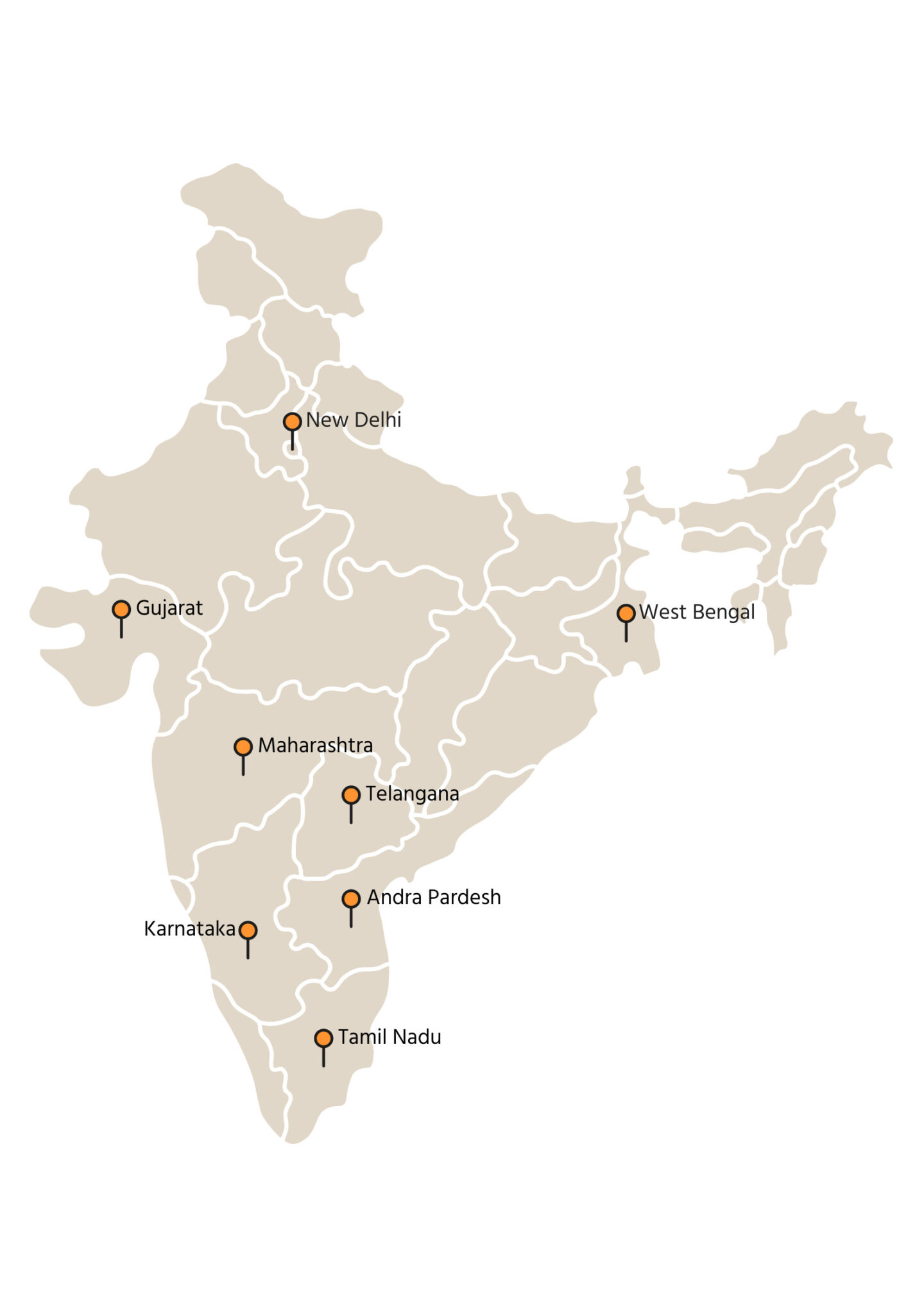
- Specialty Chemical Manufacturing: Establish production facilities for specialty chemicals in Gujarat or Maharashtra, serving India’s electronics, automotive, and pharmaceutical sectors while leveraging local production for cost-competitive exports to Asia-Pacific markets.
- API Manufacturing Partnerships: Form joint ventures with Indian API manufacturers to combine European process technology with India’s production cost advantages, targeting global generic pharmaceutical supply chains with enhanced quality standards.
- Pharmaceutical Contract Manufacturing: Establish dedicated contract manufacturing facilities for European pharmaceutical companies, combining Indian cost structures with European quality systems to serve regulated markets including EU under mutual recognition frameworks.
- Agrochemical Formulation Plants: Invest in crop protection product formulation facilities targeting India’s 157 million hectare agricultural land, developing customized solutions for Indian crops and climate while building export capabilities for South Asia.
Do you have a specific question about opportunities in the Indian chemical sector for your company or product?