EU-India Free Trade Agreement: what it means for European companies
The EU-India Free Trade Agreement marks a turning point in EU-India trade relations. In this article, we outline the key changes, sector implications and strategic considerations for European companies active in or entering the Indian market.
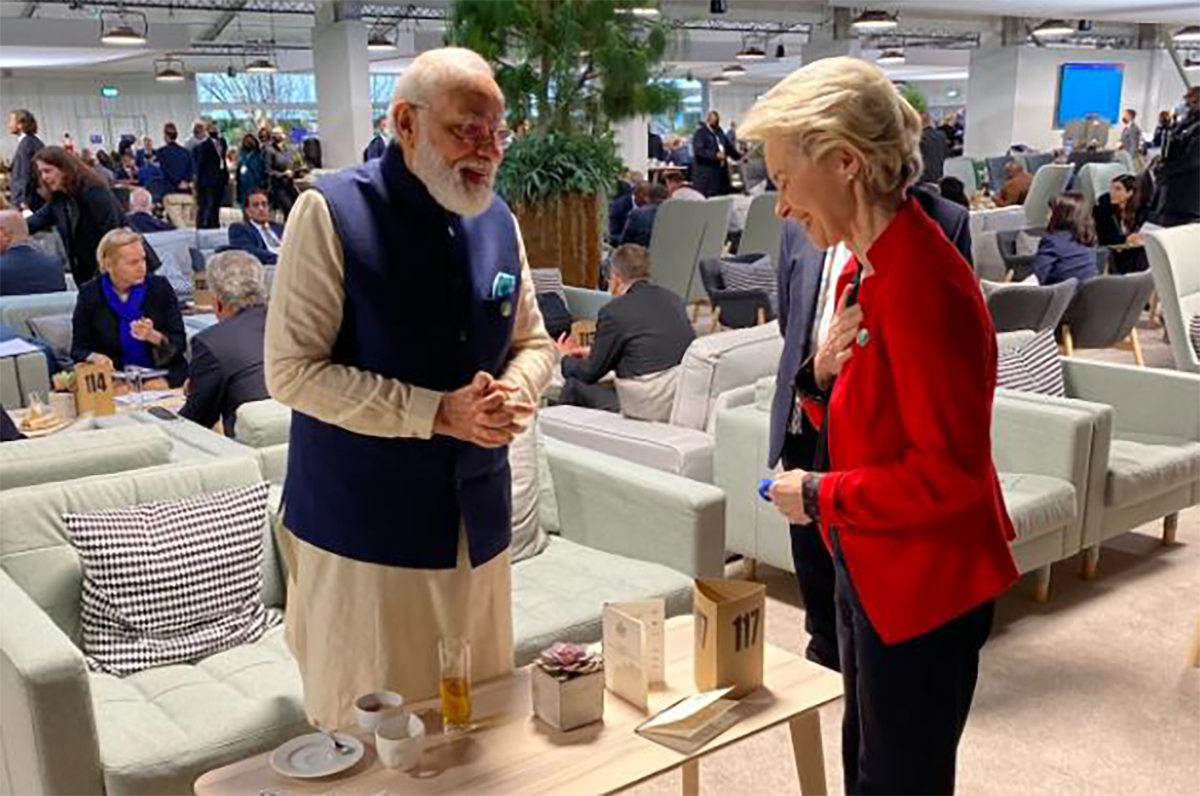
In January 2026, the European Union and India finalised the ambitious EU-India free trade agreement (FTA), that covers a market of around 2 billion people and almost a quarter of the global GDP.
For European exporters, manufacturers, investors and service providers, the agreement delivers significant tariff reductions, improved market access, stronger intellectual property protection and greater regulatory predictability.
The FTA significantly lowers the barriers to entry and expansion. For European decision makers considering India, the question is no longer whether to act, but when.The time to make a strategic decision on India is now, let us explain to you why.
We will update this article as more details about the deal become available.
Overview of the EU-India Free Trade Agreement
The EU-India FTA is a comprehensive trade and economic partnership agreement concluded after negotiations that were relaunched in 2022 and finalised in January 2026. It is the largest trade deal ever concluded by both parties, both in economic value and scope.
The EU-India Free Trade Agreement establishes provisions in five key areas:
- Significant tariff reductions on EU exports;
- Improved access to India’s services markets;
- Stronger intellectual property protection;
- Simplified customs procedures and greater regulatory predictability;
- Sustainability and strategic cooperation.
The EU and India already trade more than €180 billion in goods and services annually, supporting around 800,000 EU jobs. The agreement is expected to double EU goods exports to India by 2032.
5 strategic implications of the EU-India Free Trade Agreement for European companies
The agreement introduces five major changes that directly affect European companies. The following sections explain these areas in more detail and outline their implications for business strategy and market entry.
1. Significant tariff reductions on EU exports
India will eliminate or reduce tariffs on 96.6% of EU goods exports, making this the most far-reaching trade opening India has ever granted to a partner.
The scale of tariff reduction is expected to deliver up to €4 billion per year in duty savings, materially improving price competitiveness in the Indian market compared to non-EU suppliers.
At the same time, the agreement introduces greater long-term cost transparency, allowing companies to plan India-focused growth strategies with significantly more confidence and predictability.
Notable sector examples:
| Sector | Current tariff | What changes under the FTA |
|---|---|---|
| Automotive sector | up to 110% | Tariffs on cars will be gradually reduced to as low as 10% and on car parts will be largely eliminated over the next 5 to 10 years. |
| Aircraft and aerospace (components) sector | up to 11% | Tariffs will be reduced to zero for almost all products over a phased period of up to 10 years. |
| Machinery and electrical equipment industry | up to 44% | Tariffs will be largely eliminated over time. |
| Iron, steel and metal sector | up to 22% | Tariffs will be largely eliminated over time. |
| Chemicals sector | up to 22% | Tariffs will be mostly reduced to zero. |
| Pharmaceutical sector | up to 11% | Tariffs will be mostly reduced to zero. |
| Medical, optical and precision equipment | between 15% and 30% | Significant tariff elimination across 90% of product lines. |
| Agri-food sector | between 45% and 150% | Tariffs will be mostly reduced to zero. |
2. Improved access to India’s services markets
The agreement contains India’s most ambitious services commitments to date, exceeding the level of access and legal certainty India has granted in any of its previous trade agreements.
The following service areas are particularly relevant:
| Area | What changes | Who benefits | Impact |
|---|---|---|---|
| Financial Services | Market opened beyond previous trade agreements | EU banks, insurers and fintech companies | Legal certainty & reduced regulatory risk |
| Maritime Services | First binding commitments in maritime services | EU shipping & infrastructure firms | Treaty-level market access |
| Governance & Local Presence | Clearer rules on establishment & management | EU companies setting up or expanding in India | More predictable investment planning |
For European companies delivering high-value services alongside goods, like engineering, logistics, finance, after-sales and technical services, these changes reduce structural barriers that have historically slowed market entry.
3. Stronger intellectual property (IP) protection
A critical concern for many European companies operating in India is IP protection. The FTA significantly strengthens:
- Protection of trademarks, designs and copyrights;
- Enforcement mechanisms and legal remedies;
- Protection of trade secrets, undisclosed information and plant varieties.
The alignment of EU and Indian IP frameworks improves reliability for companies in sectors such as pharmaceuticals, industrial technology, medical devices, consumer brands and advanced manufacturing.
4. Simplified customs and greater regulatory predictability
Beyond tariff reductions, the EU-India Free Trade Agreement addresses non-tariff barriers that have traditionally complicated trade with India. It simplifies customs procedures, improves transparency around regulatory rules and approvals, and creates a more stable and predictable framework for long-term investment decisions.
For European companies managing import and export flows or operating regional supply chains, these changes reduce administrative friction, limit delays and lower compliance risk, making India a more reliable and scalable market to operate in.
5. Sustainability and strategic alignment
The EU-India Free Trade Agreement includes a dedicated chapter on trade and sustainable development, covering:
- Labour rights and social protections;
- Environmental and climate commitments;
- Support for women’s economic participation.
In parallel, the EU and India plan an EU-India climate cooperation platform, supported by up to €500 million in EU funding to accelerate India’s sustainable industrial transformation.
What the EU-India Free Trade Agreement means for your India strategy
The EU-India Free Trade Agreement lowers barriers, reduces risk and opens one of the world’s most dynamic growth markets for European companies, on terms we have never seen before.
For businesses already active in India, it offers a chance to scale faster and operate more efficiently. For those still on the sidelines, it removes many of the historical obstacles to entry.
Doing business in India has never been more attractive. With lower tariffs, improved market access and greater predictability, now is the time to take a strategic decision on India.
Get in touch with us to assess the opportunities for your company.