Aviation sector in India: market overview, growth and investment opportunities
From aircraft manufacturing to MRO, India's aviation expansion is generating opportunities across the entire value chain
Contact us for a free consultationWith a market valued at over $14 billion and four consecutive years of double-digit passenger growth, India’s aviation industry is one of the fastest-expanding in the world.
India is currently the world’s fifth-largest aviation market, having handled 211 million passengers in 2024, and the growth trajectory ahead looks promising. IATA projects India’s annual passenger traffic to triple to 425 million journeys per year by 2044.
The market is dominated by commercial aviation, with low-cost carriers leading the charge. Low-cost airlines account for 70% of total seat capacity in India, with IndiGo holding a commanding domestic market share. The Tata-owned Air India Group ranks second, following its merger of Vistara and Air India Express, and together the two airlines account for over 90% of the domestic market.

Infrastructure is expanding rapidly to keep pace. The number of operational airports has doubled from 74 in 2014 to 157 in 2024, with a government target of 350 to 400 airports by 2047. Indian airlines have placed aircraft orders exceeding 1,700 planes to meet growing demand, with total orders over the past decade surpassing 2,000 aircraft.
Underpinning this expansion is strong government support. The UDAN (Ude Desh ka Aam Naagrik) regional connectivity scheme has made air travel accessible beyond India’s major cities, operationalising 637 routes connecting 92 previously unserved or underserved airports. New legislation, the Protection of Interest in Aircraft Objects Bill 2025, is designed to reduce leasing costs and boost investor confidence.
Snapshot of the aviation industry in India
- India’s tourism and hospitality sector contribution to GDP is projected to rise from $256 billion in 2024 to $523 billion by 2034, according to the World Travel & Tourism Council.
- India’s international passenger traffic reached 69.6 million in FY2024, nearly four times the volume of just a decade ago. Traffic is currently growing at approx. 15% year-on-year, driven by rising middle-class incomes and expanding route networks.
- Air cargo is emerging as a high-growth segment: international air freight volumes grew over 17% year-on-year between 2024-2025, while domestic cargo expanded by 6.5% over the same period.
- India’s MRO (Maintenance, Repair and Overhaul) market is projected to grow from $1.7 billion to $4.3 billion by 2032, driven by the rapid fleet expansion of Indian carriers and a government push to develop domestic MRO capabilities and reduce the current reliance on overseas facilities.
- Low-cost carriers dominate the market, creating strong demand for cost-efficient infrastructure, ground handling, and ancillary services across India’s growing airport network.


The conclusion of the EU-India Free Trade Agreement in January 2026 creates tangible and immediate opportunities for European companies in India’s aviation industry. The FTA eliminates or reduces tariffs on over 96% of EU goods exports to India, including aircraft, engines, components, and MRO equipment.
A dedicated India-EU Aviation Dialogue has been established alongside the FTA, providing a formal bilateral platform for joint connectivity projects and commercial cooperation for the first time.
For European companies investing in Indian aerospace manufacturing, transition provisions built into the FTA allow supply chains to adapt in a structured, phased way. This supports the Make in India agenda rather than working against it. Broader services liberalisation across 144 subsectors will additionally benefit European firms offering ground handling, MRO services, logistics, and air traffic management solutions.
Initial benefits are expected from 2027, giving European companies a narrow but important window to establish partnerships and position themselves ahead of the curve.
Download our free guides on doing business in India
IndiaConnected has a wealth of knowledge and experience on doing business in India. With our informative guides, we help companies get started in India.
Whether you are looking for information on sales, HR, manufacturing, Mergers & Acquisitions or tax issues, you will find all the answers bundled here.

Growth indicators of India's aerospace industry
- Aircraft demand growth: According to Airbus, India will require approximately 2,210 new aircraft by 2040, driven by the fast passenger traffic growth of 6.2% per year.
- Workforce expansion needs: Meeting this demand will also require an additional 34,000 pilots and 45,000 technicians, creating significant opportunities across training, recruitment, and workforce development.
- Airport infrastructure expansion: The Indian government has committed to expanding its operational airport network from 157 to 220, alongside the development of 33 new domestic cargo terminals and 15 new flight training schools.
- Emerging drone market: India is also actively developing its regulatory framework for unmanned aircraft systems, signalling growing opportunities in the drone and UAV segment, which is closely linked to developments in the defence sector.
- Rapid market growth: India is projected to overtake China and the United States to become the world’s third-largest air passenger market by 2030, according to IATA.
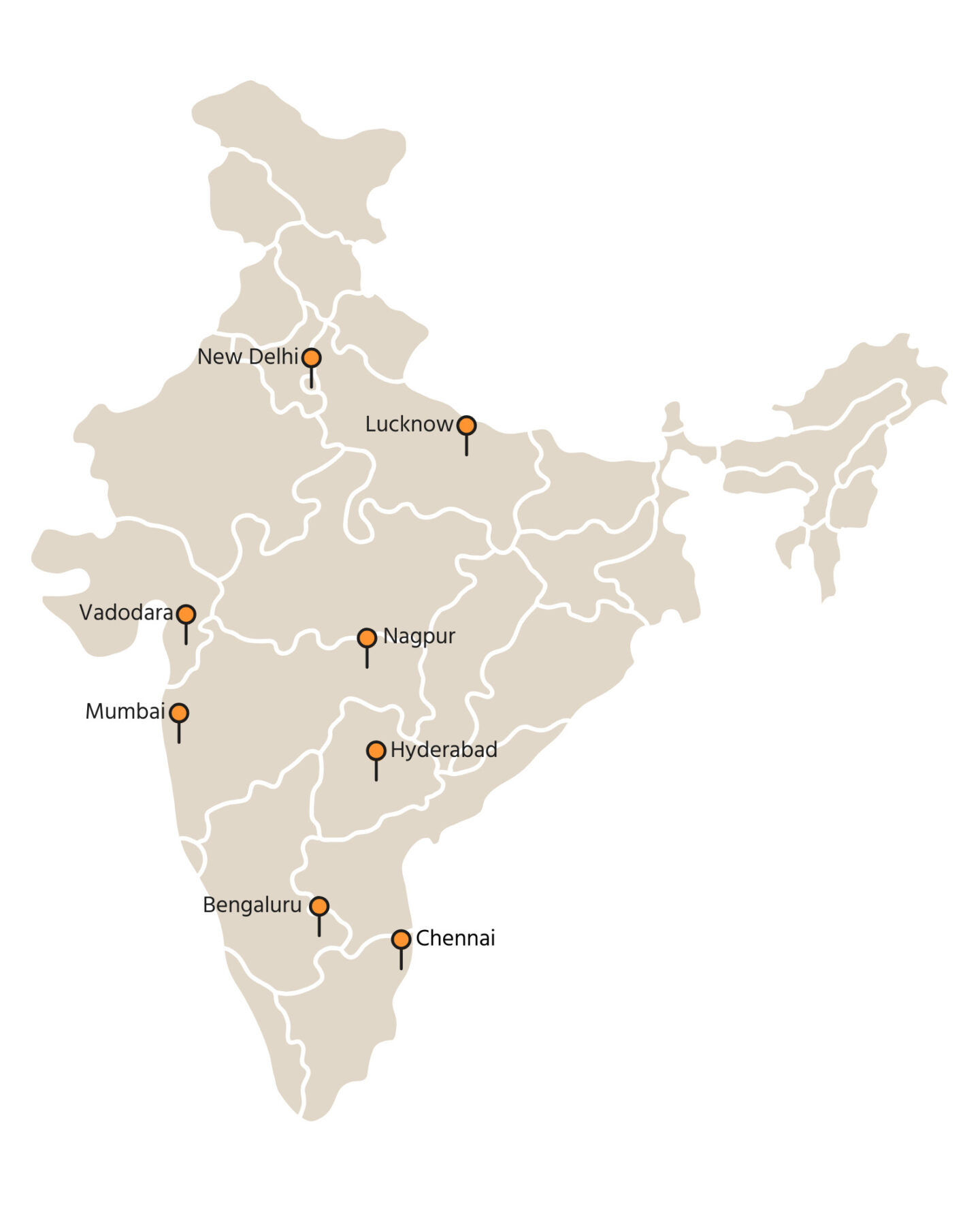
Interesting investment opportunities in India’s aviation sector
European companies in the aviation industry can benefit from the following investment opportunities in India:
- Growing MRO demand: Demand for maintenance, repair, and operations (MRO) facilities is increasing in India due to consistent growth in the aviation industry.
- Large-scale airport investments: The Indian aviation body AAI has launched development projects worth about $3 billion over the next five years for the expansion and modification of existing terminals, extension and strengthening of existing runways, air navigation services, control towers, etc.
Do you have a specific question about opportunities for your company or product in the aviation industry in India?