India is keen on European agricultural technology
India is the second-largest food producer in the world, but roughly 35 per cent of that production goes to waste due to a lack of knowledge and technology. Therefore innovative agricultural technology from Europe is in high demand in India, so companies in this sector should explore the opportunities the country has to offer.
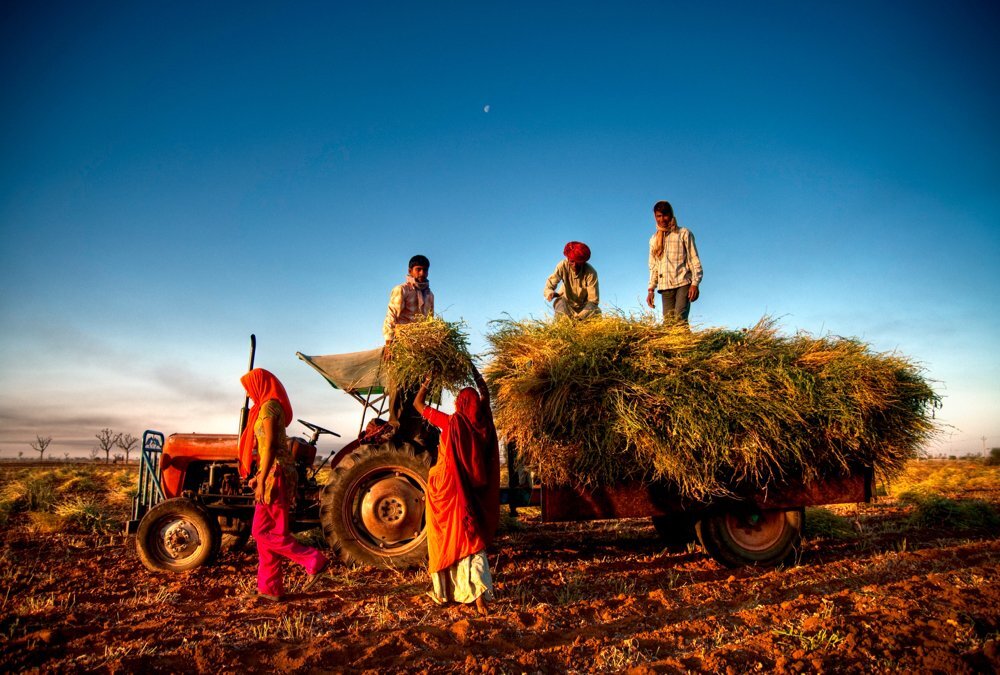
Indian agriculture sector diligently seeking European, technological solutions
While the Indian IT industry can compete with the rest of the world, Indian agriculture still lags miles behind our modern production standards.
Despite its lack of knowledge and technology, India produces a huge amount of food in a traditional manner. Only China produces more.
More than 50 per cent of Indians, some 700 million people, work in agriculture. Most of these are farmers with small plots of land – large-scale farming is virtually non-existent.
More than just rice
India’s main agricultural products are rice, cotton, ginger, cardamom and wheat.
Thanks to the huge variation in climate zones – subtropical, tropical, temperate, arid – there are ample opportunities to grow all kinds of fruits and vegetables, both for the Indian market and for export.
In western India, for instance, grapes are grown on a large scale that are found in supermarkets in Europe. Many apples are grown in the Himalayas, mainly for the domestic market.
Moderate climate
The Deccan Plateau – the large region connecting Pune, Nashik, Hyderabad, Bangalore, Coimbatore and Kholapur – offers a large agricultural area with a fairly consistent climate with moderate temperatures.
The minimum night temperature is 16°C in winter and the normal maximum temperature is 30°C, except in April and May when night temperatures are minimum 22-23°C and maximum 35-38°C.
The climate in the north of the country, in the foothills of the Himalayas, has a somewhat seasonal character. There are several microclimates here.
Northern Maharashtra, Gujarat, Madhya Pradesh, Upper Pradesh, Orissa and Bihar, all lowlands are very hot from March to September with monsoons from mid-June to late August.
Rajasthan is mainly a desert climate with high temperatures from March to October; the north has relatively cold winters (above 0°C).
Punjab has hot summers and cold winters. Potato cultivation takes place here from November to May.
Kodaikanal and Ooty (Tamil Nadu) offer a favourable climate for coffee, tea, vegetable and flower growers.
Kerala in the east has the Western Ghats mountain range, which connects to the Kodaikanal mountain range, centred on Munnar. This area offer perfect conditions for growing tea.
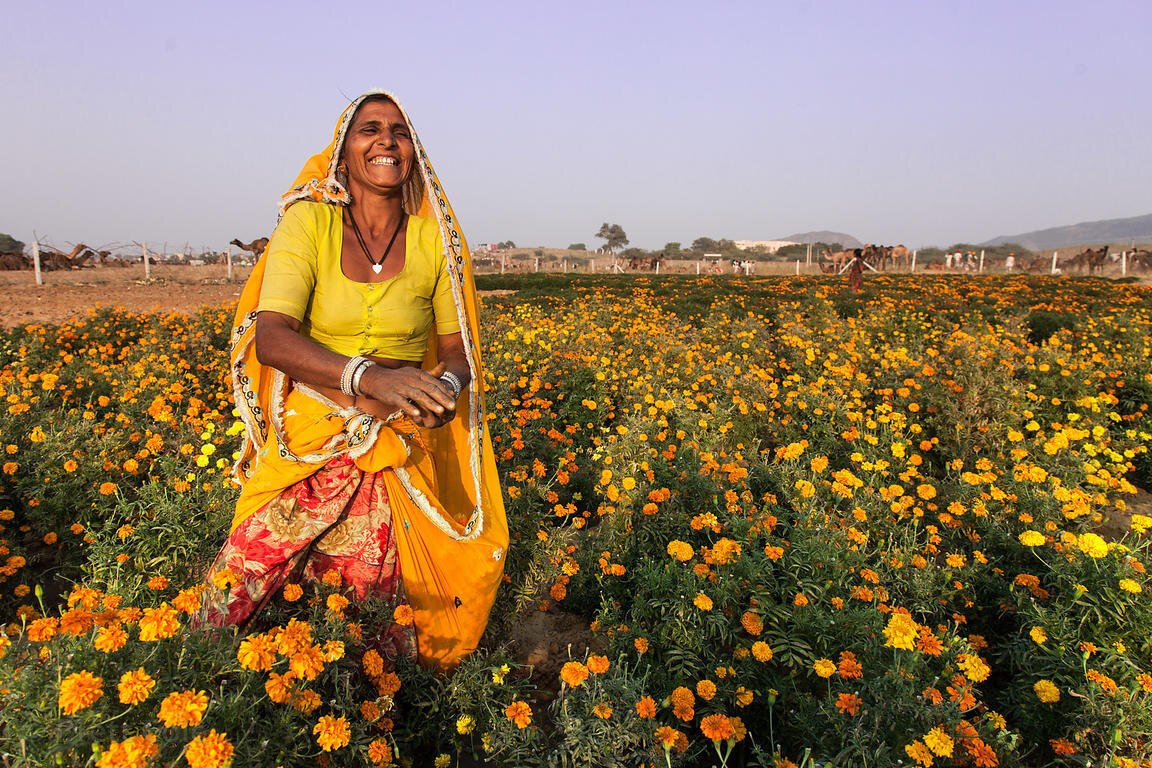
In the north of India a lot of ‘Western’ vegetables are cultivated
Himachal Pradesh in the north of the country offers a similar climate. Farmers in this region want to make the most of the climatic and soil conditions and grow all kinds of ‘Western’ vegetables such as:
- asparagus,
- broccoli,
- lettuce,
- peppers,
- celery,
- Brussels sprouts,
- European carrot,
- parsley,
- leeks,
- mangetout.
A significant area in the state already grows vegetables of European origin.
However, the northern states have hilly terrain, making logistics often challenging. Tamil Nadu and Andhra Pradesh consist mainly of tropical drylands, at about 300 metres above sea level.
There is plenty of cultivation here from June to September, after which rainfall is often too erratic. The main production involves rice, bananas, coconut, ginger and cardamom. Kerala also has a large humid coastal area where plenty of water is available.
The chart below lists the different vegetables and where they are grown in India:
| Product | Yearly output (‘000 metric ton) | Region | Advantages of the region |
| Tomato | 21,200 | Andhra Pradesh, Madhya Pradesh, Karnataka, Gujarat, Odisha, West Bengal, Chhattisgarh, Maharashtra, Bihar, Haryana, Uttar Pradesh, Telangana and Tamil Nadu. | Suitable (clay) soil, right PH value, government support. |
| Cauliflower | 9,174 | Uttar Pradesh, Karnataka, West Bengal, Punjab, Bihar, the Himalayas en in the Nilgiri Hills in the south. | Cauliflower usually grows in the cold season (18 to 20°C). Fertile soil. |
| Broccoli | 8.6 | Maharashtra and in the Tapi district. | Suitable clay soils, correct PH values, temperatures between 18°C and 23°C. |
| Cucumber | 1,100 | Haryana, Karnataka, Madhya Pradesh, Tamil Nadu, Andhra Pradesh, Telangana, Assam, Uttar Pradesh, Bihar, Jammu and Kashmir. | Good soil, suitable climate ( moderate to warm). |
| Cabbbage | 9,207 | Uttar Pradesh, Orissa, Bihar, Assam, West Bengal, Maharashtra and Karnataka. | Suitable climate (cool and humid) in winter around Nashik (Maharashtra) and Ooty (Tamil Nadu) and Kerala. |
Traditional cultivation in the Indian agricultural sector
Cultivation in India is often still very traditional. There are hardly any greenhouses: greenhouse foil is usually used to protect crops. Nevertheless, India has made progress on cultivation aspects and the use of foil, shade and net greenhouses.
The supply industry has also matured, and both equipment and facilities (greenhouses and other requirements for cultivation) are often manufactured in India itself nowadays. However, income from cultivation is modest, preventing farmers from making large investments in crop production.
Nevertheless, interest is growing in technology such as fertigation (fertilisation and irrigation), automation, substrate growth, semi-automatic climate control, modern cultivation techniques, data recording, etc.
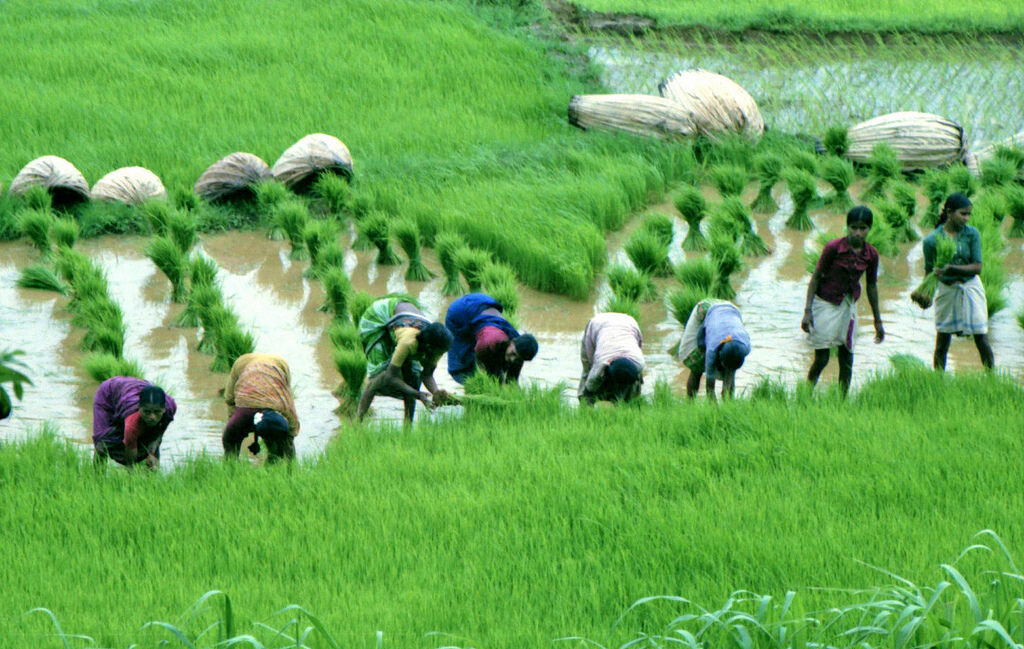
European agricultural technology for India
According to researchers at Tamil Nadu Agriculture University, India throws away billions of euros worth of fresh fruit and vegetables every year – about 30 to 40 per cent of its total fruit and vegetable production.
This is due to lack of proper harvesting methods, no or poor transport, poor or no cold storage facilities and/or refrigerated transport. Although India is one of the largest producers of fruits and vegetables, the export potential is not being realised.
Agtech aimed at streamlining supply chains and improving agricultural efficiency in India has an estimated potential of 170 billion dollars.
Investment opportunities in India’s agricultural sector
Thanks to the growing focus on healthy lifestyles, the demand for high-quality products is increasing in India. According to a major market study, India’s organic market will grow from 177 million dollars in 2020, to a market worth 553 million dollars by 2026.
Officially, India has the largest number of farmers engaged in organic farming (835 thousand), but the country accounts for less than 1 per cent of global organic production (worth around 80 billion euros). In terms of total area under organic cultivation, India ranks 9th with 1.49 million hectares.
However, the organic sector in India is unregulated and non-transparent.
Online food retail is growing
Demand for high-quality and organic products is fuelled by the young population, their growing disposable income and the trend towards eating out. The restaurant industry is booming and there is enormous interest in foreign cuisines and products.
In addition, online food retail has grown exponentially in India in recent years. Ordering groceries or food via online supermarkets or delivery services has rapidly become the norm.
The online grocery market is expected to grow from a value of $8.8 billion in 2024 to over $100 billion in 2034. And the Indian meal delivery market will grow from a value of $24 billion in 2024 to $320 billion by 2033.
Workshop: Market entry in India
Does your company have innovative manufacturing or automation solutions, but are you unsure about your first step into the Indian market? IndiaConnected has developed a high-quality workshop in which we will answer your most pressing questions about smart market entry in India during a two-hour session.
- Gain more insight into what is involved in your market entry in India.
- Receive valuable feedback on your current India strategy from independent experts.
- Expertise in every field: sales, manufacturing, legal, tax, financial, supply chain, recruitment, etc.
In the workshop, our local experts with knowledge of your specific sector will work with you to explore your issues and formulate possible answers and strategies. Afterwards, you will receive a report. Read more here.