Semiconductor industry in India
India employs nearly 20% of the world's semiconductor chip design engineers and is building one of the fastest-growing semiconductor ecosystems outside East Asia.
Schedule a meeting nowIndia’s semiconductor sector is undergoing a structural transformation. Once almost entirely import-dependent, the country is now building its own fabrication, assembly, testing, and design infrastructure — backed by one of the world’s largest government investment programmes and a deep pool of engineering talent that already plays a central role in global chip development.
The Indian government launched the India Semiconductor Mission (ISM) in 2021 with a budget of approximately USD 9.2 billion, combining the Production Linked Incentive (PLI) scheme for manufacturing with the Design Linked Incentive (DLI) scheme for chip design. The combined effect of these programmes is to reduce capital costs for semiconductor projects by up to 50%.
India allows 100% Foreign Direct Investment (FDI) in the electronics and semiconductor sector through the automatic route, making it one of the most open markets in the world for semiconductor investment.

The sector’s growth is driven by rapidly expanding domestic demand — from 5G infrastructure, electric vehicles, AI data centres, and consumer electronics — and India’s strategic ambition to reduce dependence on imported chips. The government’s target is to have ten semiconductor manufacturing facilities operational by 2028, up from one in 2023.
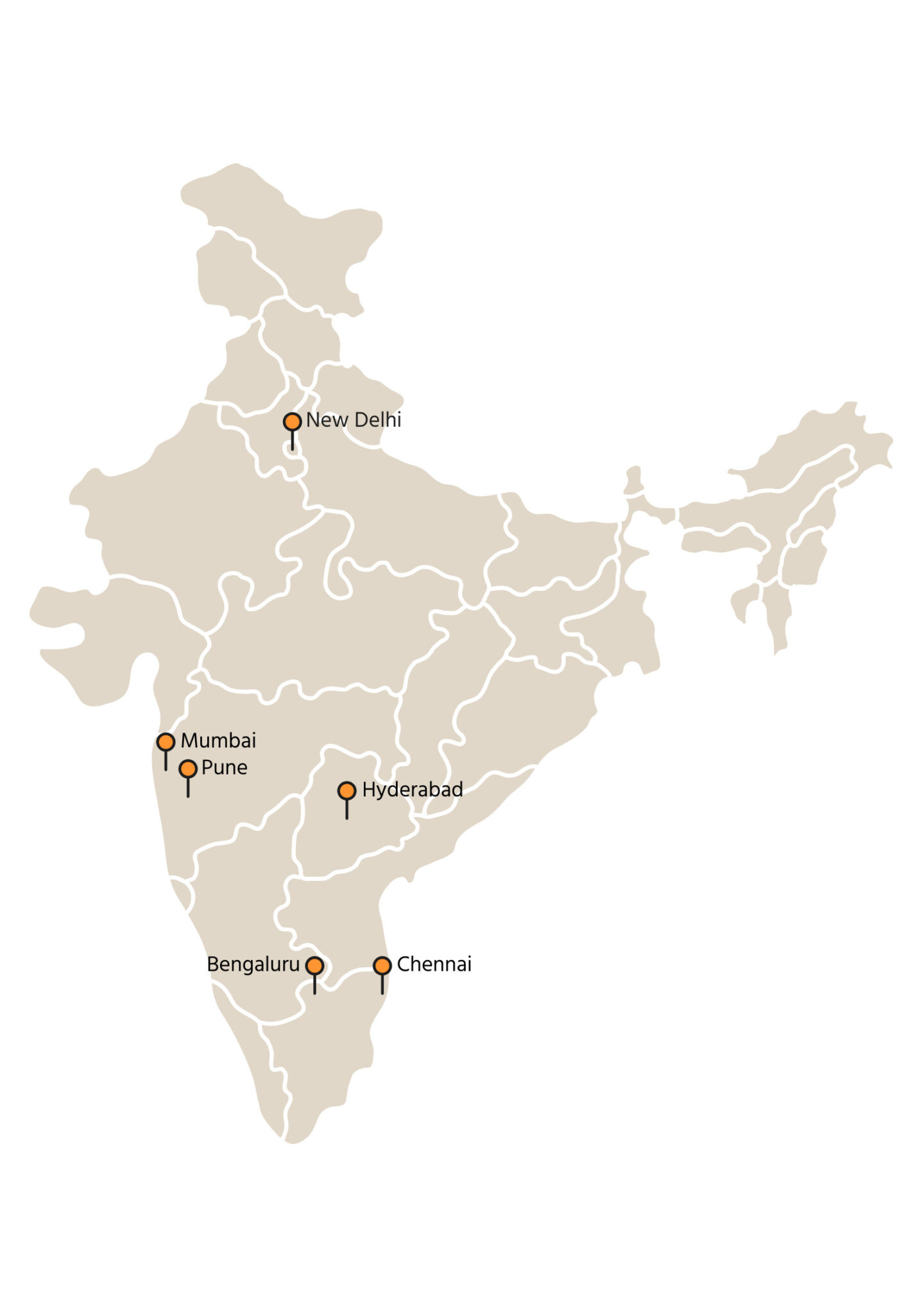
India’s semiconductor geography spans established design and R&D hubs in Bengaluru, Hyderabad, Noida, Pune, and Chennai, and fast-growing manufacturing clusters in Gujarat and Assam. Bengaluru alone hosts R&D centres for Intel, Qualcomm, Texas Instruments, NXP, ARM, and MediaTek, among others.
Overall, the semiconductor sector in India represents one of the most significant industrial opportunities of this decade — both as a destination for investment and as a rapidly growing market for equipment, materials, and services.
Snapshot of India’s semiconductor industry
- India employs nearly 20% of the world’s semiconductor chip design engineers.
- The Indian semiconductor market was valued at approximately USD 52 billion in 2024–25 and is projected to reach USD 100–110 billion by 2030 (IESA / Counterpoint Research).
- The Indian government has committed USD 9.2 billion under the India Semiconductor Mission; of which nearly USD 7.8 billion had been allocated by mid-2025.
- India has over 250,000 semiconductor professionals and added more than 58,000 new jobs in 2024–25.
- India hosts over 7% of global semiconductor design centres.
- In May 2025, India inaugurated its first 3-nanometer chip design centres in Noida and Bengaluru, placing it among the few countries working at the most advanced technology nodes.
- The Design Linked Incentive (DLI) scheme provides a 50% subsidy on chip design costs and has supported 24 chip design projects as of early 2026.
- Micron Technology’s back-end assembly and testing plant in Sanand, Gujarat, dispatched its first packaged memory chips in late 2024.
- In May 2026, ASML and Tata Electronics signed a strategic partnership to support India’s first front-end semiconductor fabrication facility in Dholera, Gujarat — a USD 11 billion project.


The EU–India Free Trade Agreement, expected to take effect on 1 January 2027, will improve market access conditions for European semiconductor companies in India. The FTA is expected to reduce or eliminate tariffs on semiconductor equipment, components, and materials, lowering import costs and improving the competitiveness of European suppliers in the Indian market.
For companies not yet present in India, the FTA creates an additional reason to establish a commercial presence before 2027, when new entrants will accelerate competition across the semiconductor value chain. Companies already established in India will be better positioned to capture the growth that the FTA is expected to unlock.
Download our free guides on doing business in India
IndiaConnected has a wealth of knowledge and experience on doing business in India. With our informative guides, we help companies get started in India.
Whether you are looking for information on sales, HR, manufacturing, Mergers & Acquisitions or tax issues, you will find all the answers bundled here.

Growth drivers of the semiconductor sector in India
- India’s rapidly expanding domestic demand from 5G telecoms, electric vehicles, AI data centers, and consumer electronics is driving strong and sustained semiconductor demand across all product categories.
- The India Semiconductor Mission (ISM) and Production Linked Incentive (PLI) scheme reduce effective capital costs for semiconductor manufacturing by up to 50%, making greenfield fab and ATMP investments commercially viable.
- India’s engineering talent base — nearly 1.5 million graduates per year, with 20% of the world’s chip design engineers — gives companies access to deep technical expertise at highly competitive cost.
- Global supply chain diversification away from Taiwan and South Korea is creating structural demand for alternative semiconductor manufacturing and design locations, with India a primary beneficiary.
- The US–India Initiative on Critical and Emerging Technologies (iCET) and the EU–India Trade and Technology Council are accelerating technology transfer and creating structured commercial frameworks for semiconductor cooperation.
- India’s government aims to have ten semiconductor manufacturing facilities operational by 2028, creating growing demand for equipment, materials, construction, and operational services throughout the decade.
- The automotive semiconductor segment is projected to grow at an 8.66% CAGR through 2031, driven by India’s fast-expanding electric vehicle market and automotive electronics adoption.
- State-level semiconductor policies — including Gujarat’s execution speed (Kaynes Sanand plant went from foundation to commercial production in 14 months) and Uttar Pradesh’s Semiconductor Policy 2024 — are accelerating investment across multiple regions.
Interesting investment opportunities in the Indian semiconductor industry
- Semiconductor Equipment and Materials: Supply equipment, specialty chemicals, high-purity gases, and precision components to India’s growing fab and ATMP ecosystem. The PLI scheme for semiconductor equipment supports domestic sourcing, and foreign suppliers with local distribution or manufacturing presence are well positioned as the fab ecosystem scales.
- Chip Design and R&D Centres: Establish a dedicated chip design or R&D centre in Bengaluru, Hyderabad, or Noida to access India’s deep engineering talent pool. India’s DLI scheme provides a 50% subsidy on design costs. Companies such as NXP, Intel, and Qualcomm have made India a core part of their global R&D networks.
- Assembly, Testing, Marking, and Packaging (ATMP): Set up ATMP operations in Gujarat or Assam, benefiting from government incentives, improving infrastructure, and competitive labour costs. Micron’s Sanand facility is the anchor example, with further ATMP investment in the pipeline.
- Sales and Distribution for the Domestic Market: Build a structured sales and distribution network to capture India’s rapidly growing domestic semiconductor demand — from automotive and telecoms to consumer electronics and data infrastructure. A well-structured channel model covering India’s geographic spread is essential for sustained growth.
- Fab Construction and Industrial Services: India’s fab buildout requires construction, cleanroom technology, utilities, logistics, and facility management expertise. Companies with relevant capabilities can position themselves as suppliers to the growing number of greenfield semiconductor and electronics manufacturing projects.
Do you have a specific question about opportunities in the Indian semiconductor industry for your company or product?